


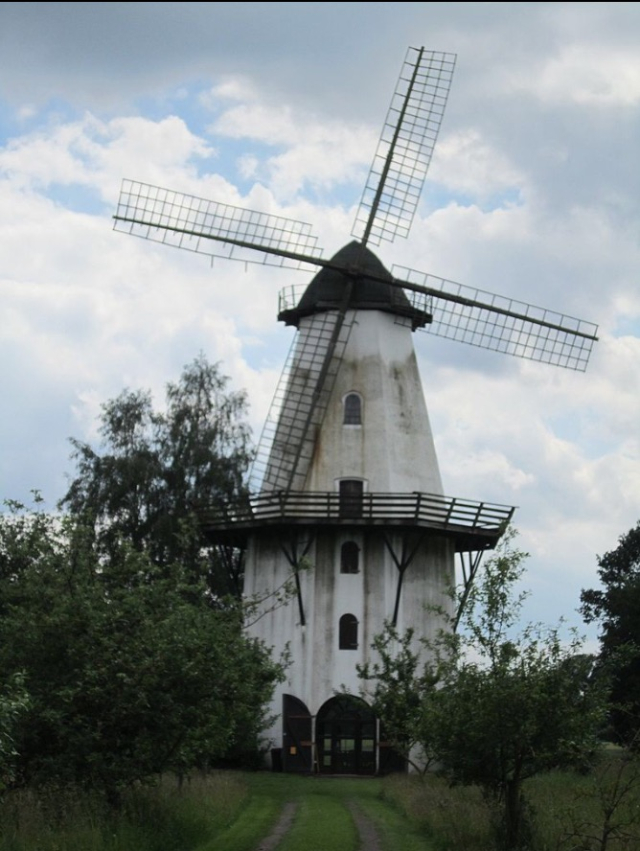
Windmühle Lavelsloh
Andreas Sandmann, whose father was born in Lavelsloh in 1931 has inserted into the Wikipedia page for Lavelsloh infomation about the Samenfeld family. Andreas read this at my “Family Speach”.
Am 19. August 1938 verließen mit der Familie Samenfeld die letzten jüdischen Bewohner den Ort (Lavelsloh), um der nationalsozialistischen Gewaltherrschaft zu entkommen. [4]
On August 19, 1938, the last Jewish inhabitants left the village (Lavelsloh) with the Samenfeld family to escape the Nazi-socialist rule. [4]
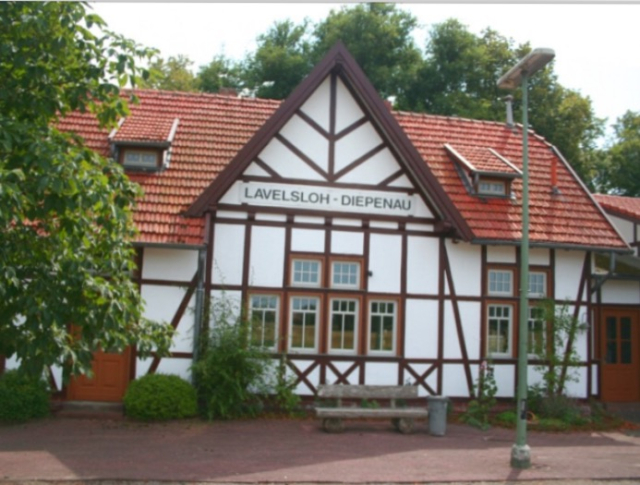
Hauptbahnhof: Diepenau
This is the train station that serves my father’s hometown, Lavelsloh, which is adjacent to Diepenau.
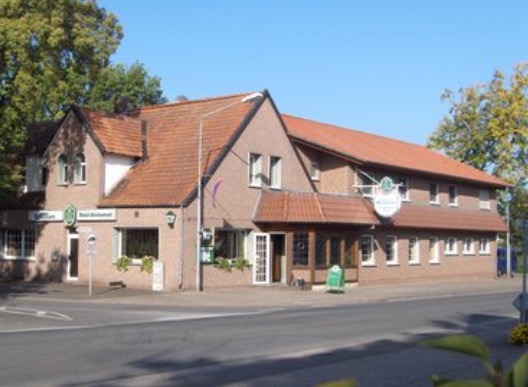
Gastromeile in Lavelsloh
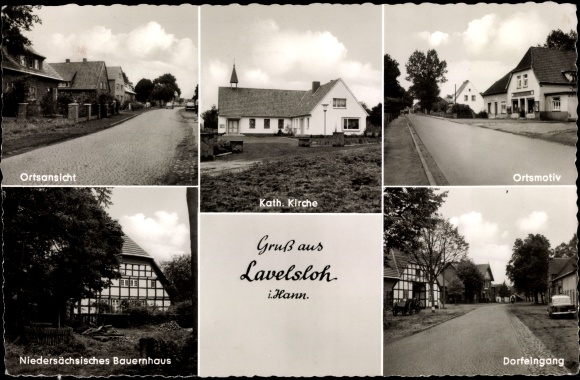
Lavelsloh: Postcard
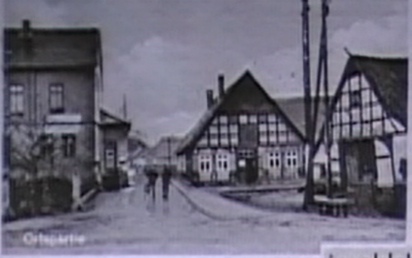
Heynemann/Samenfeld House
In the center of the photo is the house in Lavelsloh where my father and my Tante Irma were born. It is also where they had their cattle/livestock business, and also did their butchering.
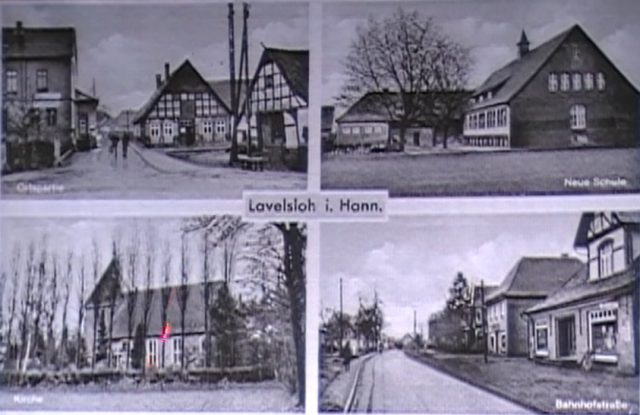
Lavelsloh: Postcard
In the upper left corner of this postcard is my father’s house. Please see the next photo for more explanation.
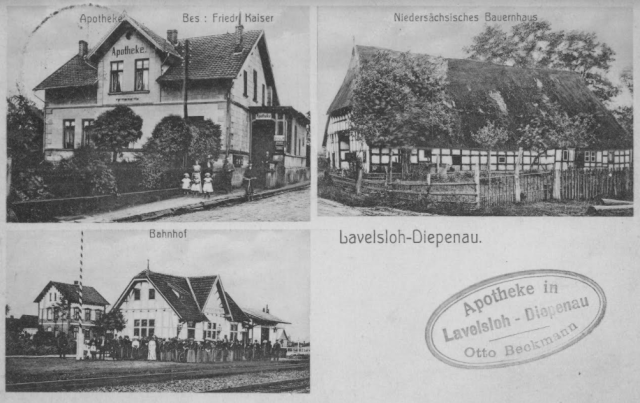
Lavelsloh: Postcard
The pharmacy is on the upper left.
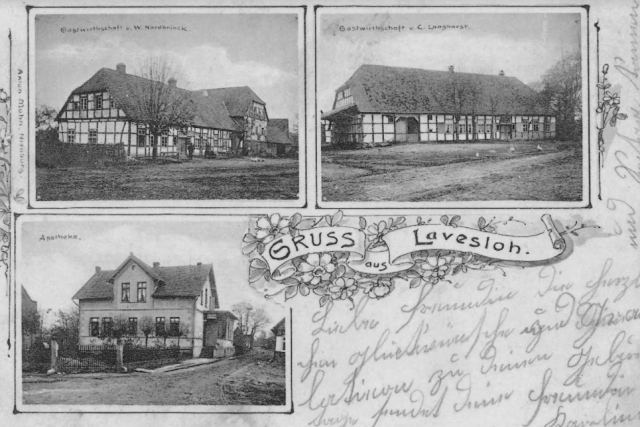
Lavelsloh: Postcard
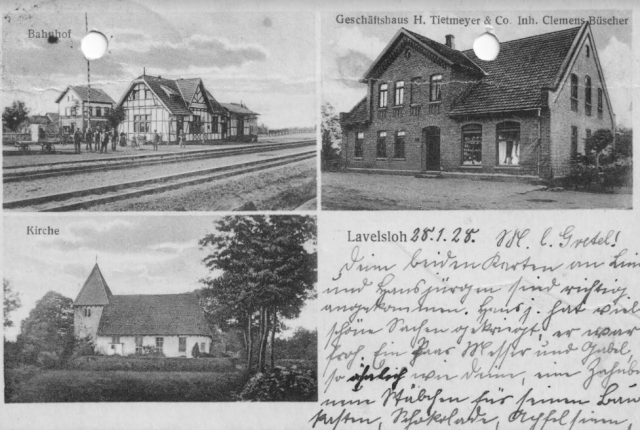
Lavelsloh: Postcard
The train station is on the upper left.
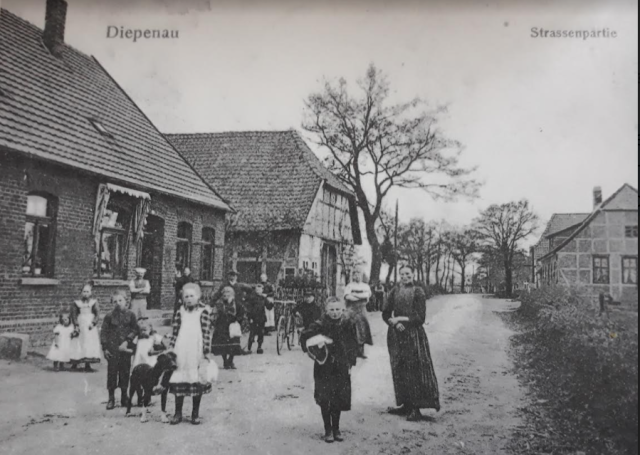
Diepenau
The building on the right side of this photo shows the synagogue.
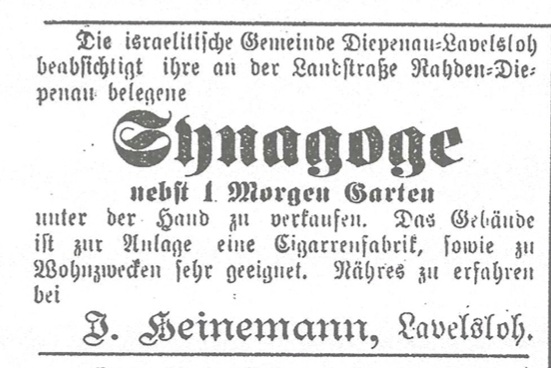
The advertisement is from 1896, the seller is probably Isaak Heinemann.
The Israelite community Diepenau-Lavelsloh intends to sell its synagogue and 1 acre of garden on the road Rahden – Diepenau. The building is very suitable for building a cigar factory and for residential purposes. More information can be obtained from I. Heinemann, Lavelsloh.
Diepenau, with currently around 4,000 inhabitants, is located in the south of the Nienburg district on the border with North Rhine-Westphalia (Minden-Lübbecke district); Diepenau, with its five districts, is part of the Uchte municipality (map sketch K., 2015, from: commons.wikimedia.org, CC BY-SA 4.0).
There are two Jewish families in the village of Diepenau in the 1780s; In the neighboring village of Lavelsloh there were three families living at the same time. They made a small living from the slaughter industry and retail trade, and they also ran a small farm.
In the 1840s, the Diepenau synagogue district was founded, to which, in addition to Lavelsloh, the localities of Uchte, Stüriede and Warmsen were affiliated. Within the congregation there were repeated “quarrels, discord, hatred, envy, intrigues and intrigues of all kinds”, which considerably impaired the life of the congregation. Religious gatherings took place in a house in Lavelsloh until the early 1840s; When this turned out to be dilapidated, they temporarily moved to a building in Diepenau. A few years later, the small community acquired a garden plot, and after obtaining a building permit from the Landdrostei, a synagogue building was built here, which was inaugurated by the Land Rabbi Meyer. The financing of the building placed a heavy burden on the community members, especially since the debt could not be reduced due to the departure of several families.
The visit to the synagogue in Diepenau did not meet the expectations of the community board, as the Jews Uchtes and Warmsens shied away from the long journey to Diepenau and therefore went to the prayer room in Uchte.
At times the small community – if it was financially possible – also employed a teacher who gave religious instruction to the few children; he also exercised the office of slaughter.
Since the beginning of the 19th century, members of the community who had died were buried on a small burial ground in Lavelsloh; A separate cemetery was available in Hamme for the neighboring villages of Uchte and Warmsen.
Jews in Diepenau:
— 1846 ………………….. 7 Jewish families, * * with Lavelsloh
— 1852 ………………….. 82 Jews, *
— 1863 ………………….. 17 Jewish families, ** ** including Uchte and Warmsen
— 1896 ………………….. 3 “”, *** *** in Lavelsloh
— 1913 ………………….. 2 “”,
— 1925 ………………….. 8 Jews (7 of them in Laversloh),
— 1932 ………………….. 4 “.
Information from: N. Kratachwill-Gertich (edit.), Diepenau, in: H. Obenaus (ed.), Historical Manual of the Jewish Communities in Lower Saxony .., Vol. 1. P. 464
Due to the falling number of parishioners and the continuing indebtedness of the parish, an attempt was made to sell the synagogue building, which had now become dilapidated, in the 1890s – presumably without success (?).
Around 1910 only two families of the Mosaic faith lived in Lavelsloh. In August 1938 the last Jewish residents left the place with the Samenfeld family.
Individual members of the former Jewish community of Diepenau also fell victim to the deportations during the Nazi era.
At the Jewish cemetery in Lavelsloh – the last burial took place here in 1937, two years later the area was closed by the Nazi authorities – around 30 tombstones are still preserved.
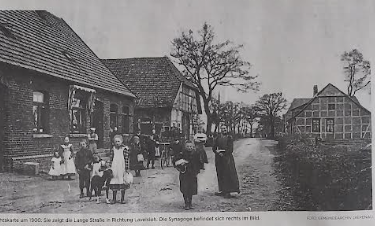
Lavelsloh
This is a picture from about 1900 of Langer Strasse in Lavelsloh, where my father was from. The synagoge is on the right side of the picture. The picture was sent to me from Michael Schwarze from Diepenau, where my grandfather was born.
 History Of The Samenfeld/Pfifferling Family