


Rabbi Kahlberg delivered the eulogy for 14 year old Albert Pfifferling. Please see the entry for Albert Pfifferling on the main page.
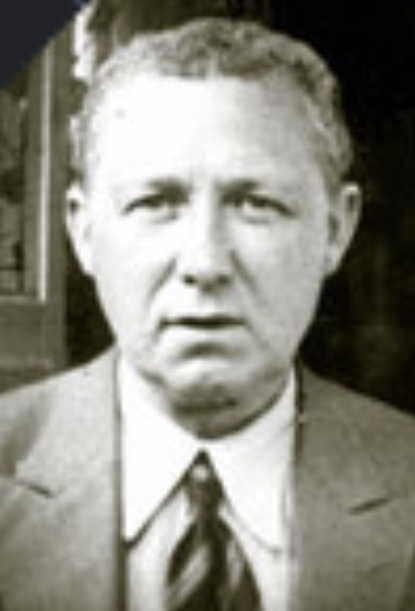
Rabbi Albert Kahlberg PhD
Rabbi Kahlberg delivered the eulogy for 14 year old Albert Pfifferling. Please see the entry for Albert Pfifferling on the main page.
Albert Kahlberg was born on 8.2.1883 as the son of the merchant Joseph Kahlberg and his wife Röschen Freudenthal in Uslar. He was married to Katharina Weiss, born on November 16, 1882 in Wroclaw. Her first husband had fallen on the Russian front in November 1914. From her first marriage, Katharina Weiss had a daughter named Lotte. Her son Josef emerged from her marriage to Albert Kahlberg. Since Albert’s father died early, he was educated in Bad Kreuznach in the family of his eldest sister Rahel, who was married to a rabbi. After graduation, Albert Kahlberg studied at the Rabbinical Seminary and at the University of Wroclaw. Among his professors there was also his uncle Jacob Freudenthal from Bodenfelde. In 1906 he received his doctorate in philosophy. Five years later he was appointed rabbi to the synagogue community Halle / Saale. Albert Kahlberg understood very early on the true intentions of the National Socialists and recognized their dangerousness. In editorials of the “Wochenblatt für die Synagogenbezirk Halle a.d.S.”, which he founded, he repeatedly pointed out the mendacity of their argumentation: “Germany awake! call quite impressive the National Socialist chants. There is no German Jewish faith that does not wholeheartedly comply with this wish. Of course, in another sense, we have to believe that the National Socialists, with their unconscionable agitation, drive people into dulling and prevent right awakening. Unfortunately, they have great success with it. “
On November 9, 1938, the synagogue in Halle was set on fire in connection with the massive anti-Jewish riots throughout the Reich territory. Albert Kahlberg was arrested and deported to the Buchenwald concentration camp. His wife, who was president of the Jewish ladies’ box in Halle, was also arrested, but was released the very next day. Through the mediation of Rabbi Dr. Loeb from Gothenburg, a former fellow student, the Kahlberg family received the entry permit to Sweden. As a result, Albert Kahlberg was released with the order from the “protective custody” to leave Germany within a week. On December 23, 1938, the Kahlberg couple left for Gothenburg as destitute emigrants, each carrying a suitcase and twenty Reichsmarks. As refugees, they did not receive a work permit and had to live on the support of the Jewish community. Albert Kahlberg acted as honorary rabbi of the Orthodox Jewish community in order not to be completely idle.
In 1939, Hans and Katharina Kahlberg were deprived of German citizenship by the German authorities. In 1948 they adopted the Swedish nationality. Since they found no place in a kosher retirement home in Gothenburg, they moved to the kosher retirement home in Hamburg in 1962. There Albert Kahlberg died on 19.2.1966 during the Shabbat service in the synagogue. He was buried in the Jewish cemetery in Hamburg. His wife died on 2 July 1969 and was buried next to her husband.
Dr. Albert Kahlberg
Rabbi in Halle / S.
1883-1966
Emil Fackenheim Recalls His Childhood and Youth in Halle, 1916-1933 (Retrospective Account)
Our own rabbi, Albert Kahlberg, did have an impact on me. The Jewish education he was in charge of didn’t seem much, but, rob us though it did of a free afternoon, it was a fact of life and thus accepted. With instruction for just two hours, plus occasional youth services on Shabbat afternoon, it may seem astonishing that this Jewish education stayed with me. But I can think of two reasons why it stuck. There was no hunting after “relevance” and no frills, only substance—Torah, prophets, siddur, history, Hebrew. And after a fashion, the teachers were professionals. I say “after a fashion” because only Rubenstein, the Hebrew teacher, was a professional, employed full time by the community. He was also the only Polish Jew I knew more than slightly in my youth. He was pretty bad at maintaining discipline, and we did not help by poking fun at his poor German; but nobody questioned his command of the subject, and I still remember grammar as he taught it. (Hebrew grammar is as exact a subject as Latin and Greek, and his experience cured me of the notion often leveled at after-hours Jewish schools—that they are not “real” school.)
But one cannot learn much Hebrew in one hour a week. And the fact that the Halle community imported a Jew from Poland to teach Hebrew speaks volumes.
Who were the other teachers, and in what sense were they professionals? There was the rabbi, of course, but also Kaufmann the cantor and Heymann the shammes (beadle), and since different classes would meet on different afternoons these four were enough. Kaufmann and Heymann were professionals, in that Judaism was not for them a part-time but a full-time job—a lifetime vocation—and it was good that teaching was part of it. (What if the caretaker of an American synagogue also had to teach?) I have fond memories of Cantor Kaufmann, a lovable person with an excellent—I would say, devout—voice, sincere and devoid of cantorial mannerisms, and a knowledgeable teacher also. As for Heymann the shammes, I remember him with affection. He was a huge man, or so he seemed to us children, with a formidable handlebar mustache. Once I came home announcing I would get a pretzel from Heymann next time. Actually it was a prize, a Pasach Haggadah. (The words pretzel and prize are similar in German.) Heymann was a natural teller of stories for the young. From the biblical stories, I remember how the wicked Jezebel was thrown out of the window and eaten by dogs.
Heymann also taught elementary Hebrew grammar, but he didn’t do it very well, for in reciting “my song, your song” and so on, everybody invariably got tuck, and Heymann would call the delinquent a sheep. Once he forgot, so I reminded him: “Herr Heymann, this one is a sheep too.”
Then there was Rabbiner Kahlberg himself. He also taught several grades; and, since he did not preach every Shabbat, had few weddings and funerals, and did not, except for holidays, have much else to do, teaching took up most of his professional time, not a bad thing for a rabbi. True, there was no adult education, for there was no demand for it, and this may have soured him on his rabbinical life in Halle. But later, when in preparation for Berlin I studied with him privately, I was amazed by his knowledge. I had only an inkling of this knowledge before, such as in bar mitzvah classes when he taught us about Spinoza on freedom and determinism. Later I learned that at seminary he had been the equal of Max Wiener, my future philosophy professor in Berlin.
Such as it was, our Jewish education had substance. More importantly, it conveyed the idea that Judaism itself was substantial rather than ephemeral and prey to fashion: it had to be respected even when it was boring. And boring Kahlberg’s major sermons—for Rosh Hashanah and Yom Kippur—may often have been. But they were solemn, for they dealt with verities.
I once wrote an essay, as a Pesach gift for my father, in which God „considered the End.“ Even then I was moved less by my father’s piety than by its simplicity: he knew enough Hebrew to read the prayers, but not enough to understand them. What impressed me permanently was this: what treasures they contain, for one who understands.
My mother’s piety was different. Cantor Kaufmann’s devoutness would reach a climax, during Shabbat-eve services, when he recited the Hashkivenu. [ . . . ] This was my mother’s favorite prayer, or so I always assumed. I put it this way, because she communicated this much of her piety, but not much more. Hers was not a simple faith. Women did not attend university in her time, but she would have fit naturally in any philosophy or literature seminar. [ . . . ] My mother wrestled with Judaism, with Germany, with modernity, with all these things in light of the Great War. My father had a copy of Kant’s first Critique (which I have inherited), but there was never any doubt she was the thinker in the family. My mother’s books [ . . . ] are carefully inscribed. The earliest is Schopenhauer’s Aphorisms on Wisdom for Living, dated November 29, 1917. Next is Schopenhauer’s On the Vanity of Existence, dated December 1, 1917. Thereafter is Schopenhauer’s magnum opus, The World as Will and Representation, dated December 16, 1917. That permanently depressed and depressing philosopher must have struck a chord with her, and she herself must have been depressed; no wonder. Her father had died young, her sole sibling, Willy, was killed in the war, and, with my father presumably at the front, she must have bought the Schopenhauer—which was unsigned by a donor—herself. During that time, she was, except for the inevitable maid, alone with Alexander, aged five, and me, aged one and a half, and pregnant with Wolfgang. The Nietzsche set, dated September 30, 1920 (her birthday), was a present from my father, and the Rosenzweig volume was probably acquired on a visit to Kassel. But the Spengler work tells the most revealing story. Volume one, bought for Easter 1920, looks read and reread so much she had to have it rebound. Volume two, acquired in June 1922, in contrast, looks hardly read at all. In 1920 there was still political unrest. But by 1923 Stresemann was almost in power, peace seemed assured: perhaps the West was not “in decline” after all. Not to mention that my father was back at his profession—which he had always loved—and, with Alexander ten years old, myself six, and Wolfgang four, we were a happy family.
Source: Emil L. Fackenheim, An Epitaph for German Judaism, From Halle to Jerusalem. Madison: University of Wisconsin Press, 2007,
 History Of The Samenfeld/Pfifferling Family